
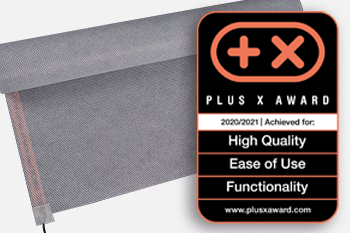
E-NERGY CARBON receives Plus X Award The E-NERGY CARBON system is a future-oriented electric panel heating system on a 36 V (SELV) basis for new buildings, refurbishments and renovations. The system is based on the patented PET, DRYTEC and FLEECE heating foils. E-NERGY CARBON FLEECE has now been awarded the PLUS X Award. E-NERGY CARBON FLEECE is 0.4 mm thin, diffusion-open, fleece-laminated and adhesion-optimised thanks to a flat perforation, because the wall or ceiling filler in which the foil is inserted can press through the perforation and create a secure bond to the substrate. In the same way, the heating foil can also be embedded in the tile adhesive as underfloor heating underneath the tiling. This makes E-NERGY CARBON FLEECE an ideal addition to the bathroom area and ensures a high level of comfort, e.g. directly in the wet area as a travelling shower heater or as an invisible towel radiator. These features have contributed to E-NERGY CARBON FLEECE winning the Plus X Award. But E-NERGY CARBON FLEECE can be used not only as a comfort heater in the bathroom. The possible applications of the new E-NERGY CARBON panel heating systems range from increasing comfort as temperature control in bathrooms and showers, to building protection as wall dehumidification, to use as a fully-fledged heating system in renovations or in the new construction of low-energy houses. The system works as a fast-acting demand heating system that can be operated and controlled room by room. Certified and compliant with standards In addition to the system’s own factory tests, E-NERGY CARBON has also been independently tested and certified by TÜV Rheinland. Of course, the complete system consisting of heating foil, power supply units and room temperature controllers also meets all other legal requirements, such as the specifications of the ÖKO design guideline.
Ventilation – the key to mastering mould prevention in social housing
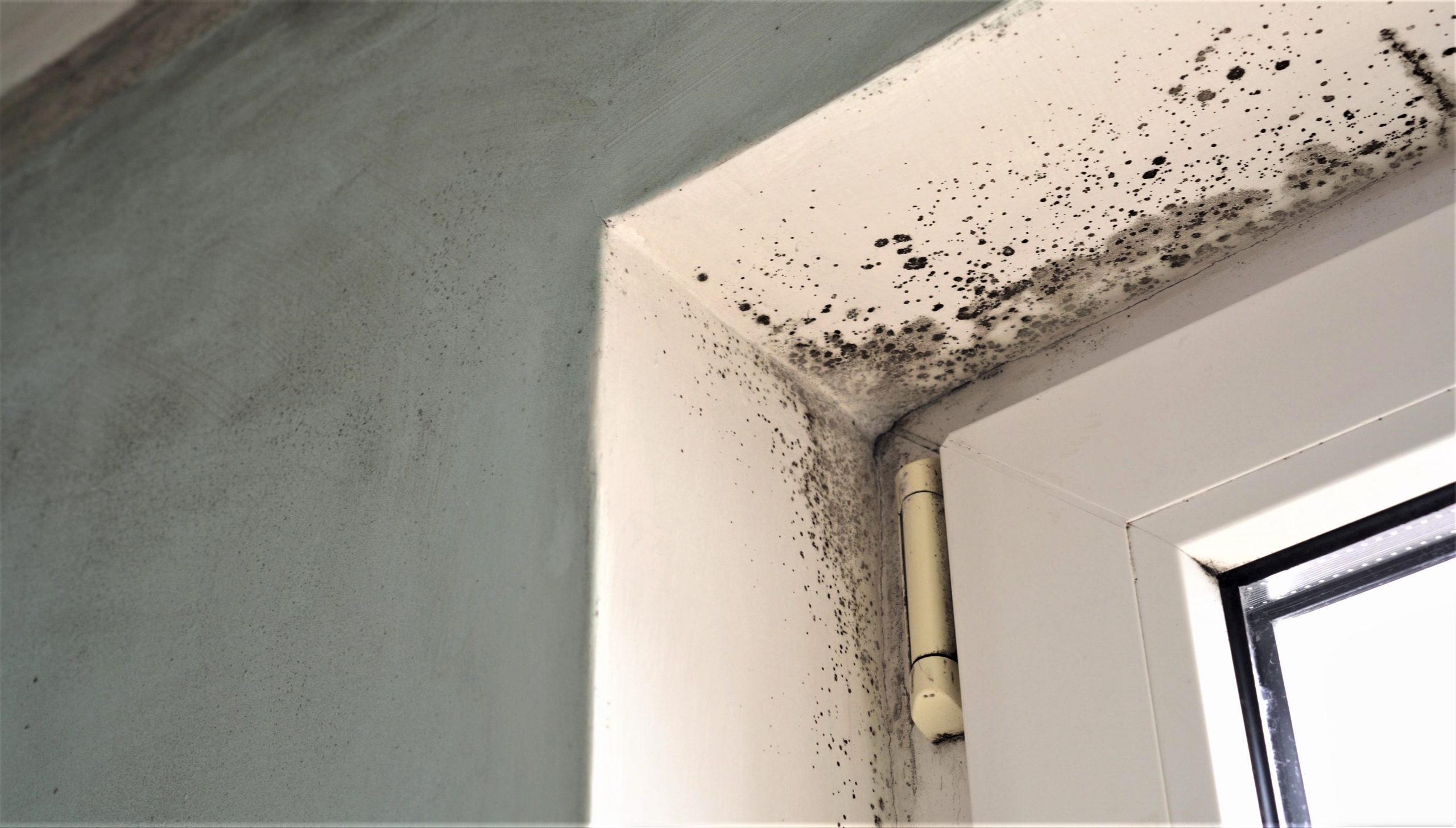
Mould is a huge issue in the social housing sector – particularly in areas with an aging housing stock. Understanding how to prevent and eradicate it means properly understanding exactly what it is, argues Nick Gander and Rod Davies of Energy Carbon. Mould – on the surface, at least – isn’t the most inspiring topic in the world. It appears in our homes. It’s annoying, and it’s hard to get rid of. But when you’re managing social housing, it’s not just a nuisance – it’s something with the potential to do huge damage to the fabric of a building, and harm the health of your residents. And to beat it, we need to get a solid grasp of what it is, and where it comes from. ‘Mould’ is the collective name for a breath-taking array of different types of fungi. If they didn’t play havoc with our bathrooms, attics and basements, they’d be excellent standard-bearers for the sustainability-obsessed, net zero age. They’re nature’s recyclers – feeding on organic matter by releasing enzymes that break it down and convert it into energy. And they exist practically everywhere, except under the sea, the coldest parts of Antarctica and the Arctic – and clean, dry, adequately ventilated rooms. Harming homes and health Why is ventilation so important? Because warmth and moisture are the two most critical things that mould needs to grow. The spores are everywhere already – even in the very air we breathe. So all it takes is for those spores to float into an area where the conditions are right for mould to take hold, then run riot. Let’s take the most infamous mould breeding ground as an example – the humble bathroom. By its very nature, it’s often damp. The air fills up with moisture. Without ventilation, that pushes up the relative humidity, which in turn creates condensation. The water droplets that form on colder surfaces go on to provide the perfect breeding ground for mould. And when it’s disturbed, more spores are released, which don’t just continue the same vicious cycle – they can cause nasal and sinus congestion, sore throats, headaches, body rashes, aches and pains and more. Break the cycle with Energy Carbon All of which means that if you want to beat mould – and spare both your housing stock and your residents from its many ill effects – you have to break that cycle. And in our view, the best way to do that is to introduce greater ventilation. Our ingenious decentralized heat recovery air ventilation product refreshes the air without increasing your energy bills, with our largest Gemini 5000 unit using a maximum of just 4 watts. The almost silent product removes stale air from inside the home – but an innovative ceramic heat accumulator collects and stores up to 98% of the heat. Then the unit draws in fresh air from outside and brings it in, using the stored heat to ensure all the warmth the heating system has generated isn’t lost. It’s extremely quick and easy to install into new builds and retrofitted in to older buildings. But it’s not the only product we offer with great mould-beating potential. We’re also experts in far-infrared heating – which provides another way of breaking the vicious mould cycle. Mainstream convection heating works by heating the air – and when that warm air comes into contact with colder surfaces, like windows, it forms moisture. In that sense, it’s quite like the weather. Water from the oceans evaporates into water vapour, that water vapour rises and cools, forming clouds which go on to produce rain. Infrared heating is different, because it warms surfaces objects and rather than the air – meaning the air doesn’t get as hot, and there aren’t any cold surfaces on which condensation can form. And together, we’re confident that our high-ventilation and far infrared heating systems offer the best way to beat mould and damp in the home. If you’d like to learn more, don’t hesitate to contact Energy Carbon today!

How airtight is too airtight?
On the surface, it seems obvious. Of course, we need to make Britain’s buildings as airtight as possible. In fact, the way we heat so many of our homes and workplaces demands high levels of airtightness. Traditional convection heating relies on radiators drawing cold air up from the floor, heating it and making it rise – then heating it again when it inevitably cools and starts to drop. It’s a slow, expensive process – and if you’ve got a house full of drafts, it’s even worse. The air you’re paying to heat quickly escapes, meaning the process has to start over and over again, with high energy bills and sizeable carbon footprints the result. But as counterintuitive as it might sound, there’s such a thing as making a building too airtight. If there’s not enough airflow into a building, you get condensation – and while it might not seem much of an issue on its own, when that condensation builds up, all kinds of other problems can come with it. A menace called mould The most obvious is mould – the fast-growing fungus that thrives in damp conditions that we’re all familiar with. Mould isn’t just an eyesore. Over time, it can eat away at the structure and fabric of a building, and cause a lot of damage. It’s not just bricks and mortar that’s put at risk by mould, too. It can also have serious health impacts. Mould and condensation can exacerbate allergies, and lead to mites and mildew that can also worsen breathing issues. This particularly impacts vulnerable people, like asthma-sufferers, people with respiratory issues, babies, children, and people with compromised immune systems. The irony is that many older buildings are actually better in this respect than some newer ones. The drafts might have been uncomfortable for homeowners, but actually allowed for greater ventilation! Introducing AirUnit So how do we square that circle? Is it possible to have well-ventilated buildings that are also warm and comfortable inside? At Energy Carbon, we believe we have the answer. When you’re at home and the air feels stale, you open a window to let some fresh air in. The problem with that, especially in the winter, is that it immediately lets out all the warm air you’ve been paying to heat. Our ingenious AirUnit ventilation product refreshes the air without increasing your energy bills. The product removes stale air from inside the home – but an innovative ceramic heat accumulator collects and stores 90% of the heat. Then the unit draws in fresh air from outside and brings it in, using the stored heat to ensure all the warmth the heating system has generated isn’t lost. It’s extremely quick and easy to install – and it’s good for buildings, for building users, and the environment, too. If you’d like to learn more about the innovative AirUnit ventilation system, don’t hesitate to contact Energy Carbon today.

Drytec set to take modular market by storm
Drytec is the latest evolution of the cutting-edge sustainable heating technology from Energy Carbon Drytec harnesses the power of far infrared energy to safely heat homes far more quickly than traditional alternatives. Designed by experts at the University of Stuttgart, and made using recycled materials, Drytec can be fitted behind the plasterboard by a single person, without the need for wet trades. Once installed, Drytec can deliver thermal comfort at temperatures up to four degrees lower than conventional heating, while improving air quality by removing the convection roll that sees many heating systems raise dust and other allergens. The BSRIA-tested, TUV-accredited system has an expected lifespan of over 50 years, making for excellent cradle-to-grave credentials. Drytec can heat rooms, while retaining low surface temperatures at point of delivery, thus protecting both the building fabric and homeowners from overheating. Perfectly suited to the fast-growing modular housing market, Drytec is the quick, convenient and sustainable heating solution for the net zero age. If you’d like to learn more, don’t hesitate to get in touch! Email us at hello@flooringworld.uk or call 0203 507 1659.

With its Future Homes Standard, is the government missing a trick?
In January, as millions of people adjusted to life under the third national coronavirus lockdown, the government quietly released a document with sweeping implications for the future of UK construction. It was its response to a 2019 consultation it held on its Future Homes Standard – Whitehall’s attempt to dramatically reduce the environmental damage caused by Britain’s houses and its housebuilding sector, as part of broader efforts to achieve net-zero carbon by 2050. The Standard’s aim is simple, but far-reaching. It’s designed to cut the carbon produced by the average new-build house by between 75 and 80% in the coming years – something that would make a huge contribution to that quest for net-zero. Originally, ministers had intended to introduce interim measures in 2020 to strengthen Building Regulations as a stepping-stone to the full Future Homes Standard. These measures would aim to cut the carbon emissions of the average new-build by 31%. Unsurprisingly, given the vast disruption caused by the coronavirus pandemic, this was postponed. In its consultation response, however, the government announced that this interim phase would begin in 2021. Details will be finalised by December 2021, before coming into force officially in June 2022. The wheels starting to turn? We also got some much-needed clarification about exactly what the measures would entail. With its interim ‘stepping-stone’ to the full Future Homes Standard, the government’s aim is to ensure that new-built homes are not installed with fossil fuel heating after 2025, and won’t require further retrofitting to make them fit for 2050. The government is also set to close the loophole that’s previously allowed builders to only have to meet the energy efficiency standards that were in place when a development first started, even if those standards change in the meantime. From now on, rules will apply to individual buildings, not whole developments. These are all extremely welcome moves. It feels like, finally, the wheels of the urgently-needed net-zero transition are starting to turn. However, there are aspects of the government’s proposals we’re less impressed with. No magic bullet In their consultation response, ministers explicitly say that “low carbon heating systems will be integral to the specification of the Future Homes Standard”. However, they then go on to say that “we anticipate that heat pumps will become the primary heating technology for new homes”. At Energy Carbon, we’ve long been arguing that there’s no magic bullet solution to low-carbon heating, and that in 2050, we’re likely to draw on a variety of different technologies to help us heat homes both sustainably and efficiently. We believe that air-source and ground-source heat pumps have their place – but they come with their own issues. The first relates to their longevity. Heat pumps aren’t just very expensive, they require increasingly expensive annual maintenance visits, and even then, a heat pump product installed today is likely to need replacing a number of times between now and 2050. That means a huge amount more embodied carbon (a yardstick of sustainability that the government short-sightedly aren’t using as part of the Future Homes Standard as it stands) – and many heat pump products use refrigerants that themselves contribute to global warming when they’re released into the atmosphere. What’s more, heat pumps are extremely complex products – meaning any maintenance or replacement work requires the services of specialist engineers, who, for the moment at least, are very few and far between. We therefore believe that the government is being very short-sighted by presenting this one heating technology as the solution to a complex problem – a problem likely to need all sorts of different systems to properly address. The case for infra-red So far in any of its documentation relating to the Future Homes Standard, the government is yet to mention the huge potential of our own area of expertise – far-infrared. Infrared refers to a division of the electromagnetic spectrum. Within that division, there are three types of infra-red radiation: near infrared, mid infrared and far-infrared – and it’s far-infrared that’s by far the most beneficial for heating homes and its occupants. In fact, it’s the exact same frequency of light called ‘the light of life’ generated by the sun, invisible to the naked eye, but capable of warming us directly. Far-infrared radiation warms all the surfaces and objects in a room, rather than the air – and those surfaces and objects then go on to radiate heat themselves. The embodied heat gathered in these areas slowly releases back into the room, letting occupants turn down the thermostat. This in turn allows for a very fast reaction time to perfectly control the room temperature. Its fast reaction times mean occupiers feel the benefits within minutes of the thermostat switching back on – saving energy, and cutting carbon emissions. We believe it can make a major contribution to the collective effort to reach zero carbon by 2050 – and we call on the government to seriously consider promoting its use as part of the Future Homes Standard. For further information, please call 0203 507 1659 or contact us at hello@flooringworld.uk.
Green building pioneer embraces Energy Carbon’s far infra-red heating
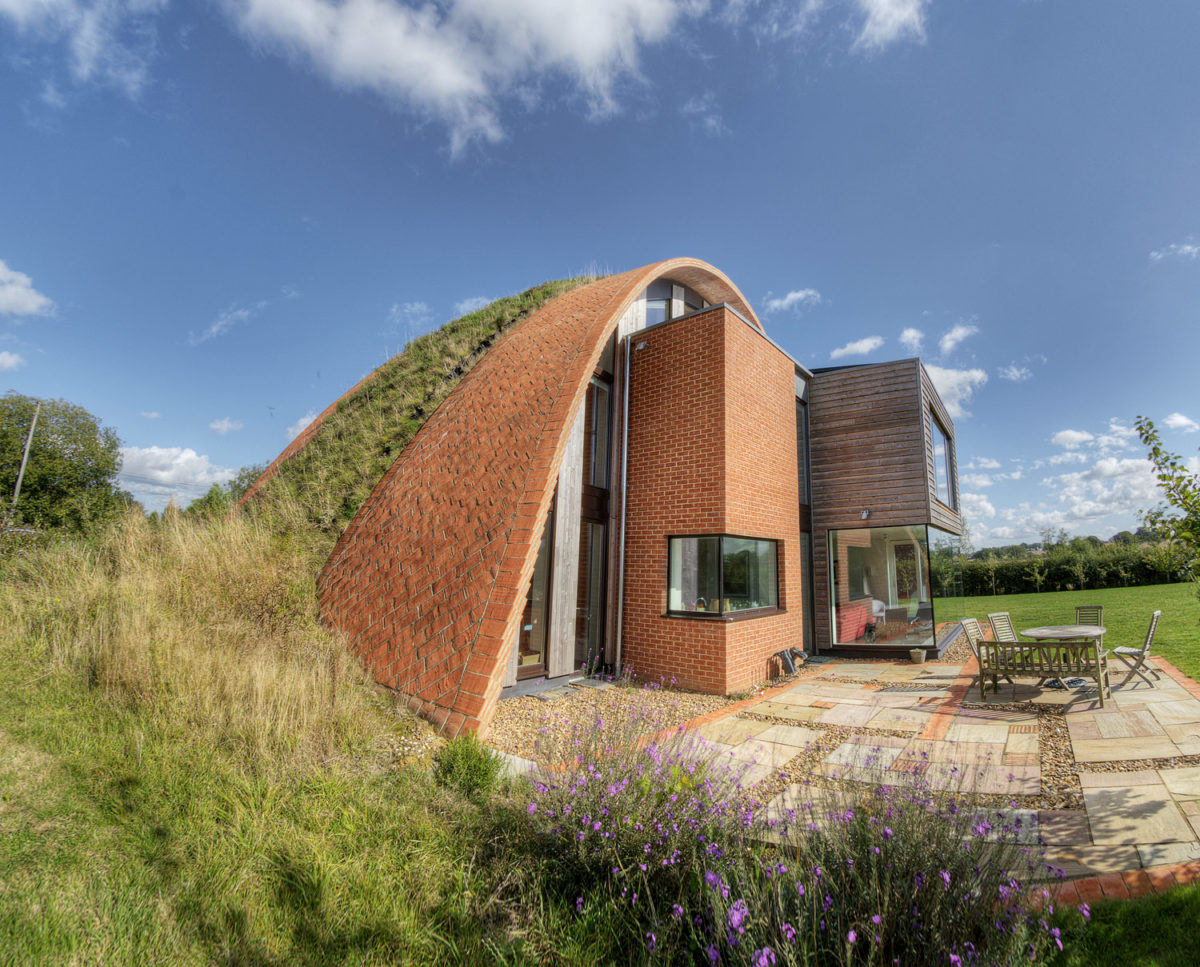
Richard Hawkes is a man who knows promising sustainable tech when he sees it. The founder and driving force behind Hawkes Architecture, Richard first came to prominence for an ambitious self-build passive house featured on Channel 4’s hit TV show Grand Designs way back in 2009. In the years since, Richard has gone on to become a pioneer in ingenious, sustainable building – and when he first came across the innovative far infra-red heating technology supplied by Energy Carbon, he immediately wanted to learn more. Richard is the UK’s foremost expert on Paragraph 79 – the section of UK planning law that lets architecturally outstanding, environmentally-friendly buildings be constructed in places that more conventional designs wouldn’t. Heating is the most carbon-intensive aspect of Britain’s built environment – and with heating tech that’s quick to work, uses very little electricity and is easy and inexpensive to install, Richard knew he could make future projects more sustainable than ever before. “I was blown away by the Energy Carbon tech when I saw it up close,” Richard comments. “I could instantly see it had huge potential, not just for the kind of projects we work on, but to help the UK reduce the carbon impact of heating in the years ahead.” “I wanted to find a way of quickly demonstrating the technology to my clients – and after speaking to Rod and Nick at Energy Carbon, they agreed to fit out my main meeting room with the heating fleece.” “That way, I can bring people in to a warm, comfortable room, explain the concept behind far infra-red heating, and then point to the ceiling and say ‘that’s what’s heating you right now!’” Rod Davies of Energy Carbon comments: “We’re absolutely delighted that Richard has taken such a keen interest in the heating technology we provide.” “We’re huge admirers of his work, and with him on board, we’re confident that our products will soon be part of some of the country’s most sustainable, architecturally outstanding buildings.” If you’re interested in learning more, don’t hesitate to get in touch – call 0203 507 1659, or email hello@flooringworld.uk today.
Ground-breaking infra-red heating bolstered by BSRIA test pass
Last month, we became the first company of our kind to have products pass stringent BSRIA testing. BSRIA is one of Britain’s most respected independent testing centres specialising in construction, with a worldwide reputation for impartiality and expertise, and we’re delighted to have got their seal of approval. We supply fast, cost-effective and energy-efficient heating technology developed over six years by experts from the University of Stuttgart, working alongside one of Germany’s largest industrial corporations. By harnessing the power of far infrared, our innovative products provide heat that warms the objects in a room rather than the empty space, meaning homeowners can switch it on and quickly be feeling the benefits. Getting the green light from BSRIA is a major milestone, as our co-founder and director Rod Davies explains; “Both my business partner Nick and I are hugely passionate about the potential of far infrared heating. We genuinely believe it will revolutionise the way millions of homes around the world are heated, and, in turn, help drastically curtail the carbon emissions the built environment produces. “However, like any new technology, it needs to be rigorously tested by independent third parties to show it’s safe, and that it does what it says on the tin. “We’re delighted that, after being comprehensively examined by one of the most respected testing centres of its kind, our products have been found to be both – and we’re confident that this will only accelerate its adoption by housebuilders across the country.” If you’re interested in learning more, don’t hesitate to get in touch – call 0203 507 1659, or email hello@flooringworld.uk today.

Are we serious about saving the planet – or are we just ticking boxes?
Before coronavirus, at least, it was hard to get away from talk about climate change. Schoolchildren were striking, scientists were issuing increasingly dire forecasts, and seemingly every brand on the planet was trying to convince us that they were passionately committed to sustainability. However, it was a lot rarer to see any of that talk translated into action. At times, it feels like ‘sustainability’ is at risk of becoming just another corporate buzzword that every business has to say it signs up to, but doesn’t mean much beyond the flashy marketing. The latest report from the UK’s Committee on Climate Change seemed to recognise this – calling for the country to overhaul its approach to sustainability, and reminding us that while the challenge ahead of us is daunting, it can and must be achieved using the sustainable technology we have now. Understanding net zero ‘Net zero’ is another of those phrases you hear a lot, but it’s important to grasp exactly what it entails. To reach net zero carbon emissions, we need to almost totally eliminate the carbon produced by building, heating, power generation, transport, manufacturing and every other area of human activity – and find ways of removing emissions that are completely unavoidable from the atmosphere. The scale of the task ahead of us is staggering – and if we’ve got any chance of achieving that daunting objective by 2050, every business in Britain needs to be taking action. In heating and construction more broadly, the sector we specialise in, it’s especially urgent. Between now and 2050, in fact, heating is likely to be the key battleground in the fight for zero carbon – and it’s time that the construction sector acknowledged that. No magic bullet There’s no magic bullet solution to low-carbon heating, and in 2050, we’re likely to draw on a variety of different technologies to help us heat homes both sustainably and efficiently. Air-source and ground-source heat pumps could be part of the solution – but they come with their own issues. The first relates to their longevity. Heat pumps aren’t just very expensive, they require increasingly expensive annual maintenance visits, and even then, a heat pump product installed today is likely to need replacing a number of times between now and 2050. That means a huge amount more embodied carbon – and many heat pump products use refrigerants that themselves contribute to global warming when they’re released into the atmosphere. What’s more, heat pumps are extremely complex products – meaning any maintenance or replacement work requires the services of specialist engineers. Fit it … forget it – could far-infrared lead the way? However, we believe the solution with the biggest potential to help make British homes fit for 2050 is far-infrared heating. Students at the University of Stuttgart worked for six years to perfect a infra-red heating solution that was easy to fit, extremely energy efficient, and exceptional enough to earn some of Germany’s most stringent accreditations, including TUV certification. The fleece can be plastered into the ceiling/walls becoming invisible and part of the fabric of the building – or in the case of our new DryTec solution, placed behind plaster board if no wet trades are on site – to provide safe, healthy far-infrared warmth. Infrared refers to a division of the electromagnetic spectrum. Within that division, there are three types of infra-red radiation: near infrared, mid infrared and far-infrared – and it’s far-infrared that’s by far the most beneficial for heating homes. In fact, it’s the exact same frequency of light called ‘the light of life’ generated by the sun, invisible to the naked eye, but capable of warming us directly. Far-infrared radiation warms the objects in a room, rather than the empty space – and those objects then go on to radiate heat themselves. Its fast reaction times mean occupiers feel the benefits within minutes of the thermostat switching back on. With objects in the room being heated directly and then adding to the heat you can dial back a couple of degrees on IR heating using up to 12% less electricity than other standard direct electric heating, resulting in lower energy bills and smaller carbon footprints. It’s extremely durable with a design life of 50+ years – you, fit it … forget it. It’s also zone controllable, the app can integrate with all smart devices, and, crucially, uses much less energy than other forms of direct electric heating – we believe it will make a major contribution to the collective effort to reach zero carbon by 2050. If you’re interested in learning more, don’t hesitate to get in touch – call 0203 507 1659, or email hello@flooringworld.uk today.

Modular construction is the future – but is it missing something?
Nick Gander, founder of Energy Carbon, explains why low-carbon, far-infrared electric heating in a modular home heating perfectly complements sustainable modular construction. When it comes to housing, the UK has its work cut out. It’s estimated the country needs to be building nearly 350,000 homes every year to meet rising demand – which is a huge step up from where we are at the moment. We need more housing, more quickly – and that requires the construction sector to become a lot more productive. But if that wasn’t challenging enough, we have to achieve all that while drastically reducing the built environment’s ecological impact too – both in terms of the construction process, and buildings’ carbon footprints over their lifetime. That might sound like an impossible square to circle, especially given the rapidly shortening time we have to do it in. It’s only thirty years until 2050, by which time the UK’s committed to reaching net zero. But it’s possible we’ve been looking the solution in the face for decades and not realised it in the form of alternative heating for MMC Modular construction Modular construction is nothing new. Millions of British people, in fact, grew up in prefabricated housing built after the Second World War. But thanks to enormous advances in technology, modern modular buildings are a world away from the flimsy prefabs of the past – and offer a quicker, cheaper and much more sustainable alternative to conventional brick-built construction. Modular construction is green because it tends to produce much less waste, and also because whole buildings can be disassembled and used again if necessary. However, many modular buildings still aren’t as green as they could be – and that’s because very often how they’re heated gets overlooked. How green are the green alternatives? If you take a sustainably-constructed building, then fit it with a heating system that’s not environmentally friendly, you’ve not got a sustainable building any more. In the decade ahead, we’re likely to see a drastic reduction in the use of worst-offending power sources like coal, oil and gas, and the old-fashioned heating systems that use them. However, some alternatives that look very green on the surface aren’t anywhere near as sustainable as they seem once you start digging a little deeper. Air-source heat pump technology is often presented as the future of heating, but it’s got significant downsides – they’re very expensive, require specialist technicians to install and maintain, have short lifespans, and in some cases the refrigerant they use can itself contribute to global warming. Far-infrared A much better solution – and one that’s very in keeping with the speed and ease of modular construction – is far-infrared. Infrared radiation is produced by the sun. It’s measured in microns, with ‘near’ infrared sitting between 0.76 and 1.56 microns, ‘mid’ infrared measuring between 1.5 and 4 microns, and anything above 4 microns classed as far-infrared. Between 8 and 10 microns, to be precise, is the most beneficial to the human body – and it’s exactly this sort of infra-red radiation that the products we supply at Energy Carbon provide. Fit it … Forget it and no more radiators Traditional heating systems work on a convection system. Radiators or electric storage heaters draw cold air from the floor, and heat it so that it rises to the ceiling, where it cools, falls to the floor and the process continues in a loop – which can result in poor air quality, as dust particles rise. Convection can be slow, expensive, and, often, totally ineffective – all you have to do is open the front door, and the heat escapes, taking you right back to square one. This mix of hot and cold air can also create moisture that causes mould and mildew, and, more importantly, health issues for occupants. Far-infrared electric heating in a modular home is different. Far-infrared does not create moisture as it is not heating the air. The radiant heat warms objects in the room instead of the air itself. The objects in turn release their own heat, and the room is kept at a far more even, comfortable temperature. With no convection roll, you get a dramatic drop in the amount of dust particles and or mould, which can alleviate allergen-induced asthma. Additionally, occupants ‘feel’ the energy themselves, much the same as they feel the warmth from the sun. This feeling of warmth allows the heating to run at around 1-2 degrees lower than conventional heating, thus saving further energy. The far-infrared solution Energy Carbon provides was originally developed by students at the University of Stuttgart. They had worked for six years trying to create an energy-efficient heating system which was effective, easy to install, and completely safe. Using industry waste materials, the students engineered a far-infrared heating system which is sustainable, had great carbon-reducing credentials, and produced radiant heat which could travel up to three and a half meters. The technology is now widely used across Germany, and over 100,000 linear metres of it have been fitted to date. What’s more, where alternatives need extra skilled trades and engineers to install and maintain, our heating products are incredibly simple to install into the walls or ceilings of a room, using existing trades and requiring no ongoing yearly maintenance. Fit it … Forget it. Find out more In short, we think far-infrared is the future of heating in modular construction – and if you’d like to learn more, get in touch with Energy Carbon today. Call 0203 507 1659 Contact us

Infra-red heating solution to take industry by storm as Energy Carbon makes breakthrough in retrofit market
With the Future Homes Standard calling for heating demands to be met using low carbon sources such as direct electric heating to help meet net zero emissions targets, one company has heeded the call and brought the perfect solution to the UK. Dynamic South Coast start-up Energy Carbon won the exclusive UK contract to supply cutting-edge, infra-red heating technology from Germany. Developed by experts from the University of Stuttgart, working alongside one of Germany’s largest industrial corporations renowned for high-tech solutions, Far-Infrared is a robust, long-lasting and ultra-thin fleece that can be easily plastered into a ceiling or placed behind plasterboard to provide homes with low-cost infra-red heating, which starts to work just seconds after being switched on. Energy Carbon founder and Director Nick Gander explained: “For years, we have been hugely passionate about the potential for infra-red and our German partners have designed Far-Infrared, thanks to years of intensive research and development, that is the answer to energy efficient heating solutions for homes both now and in the future. “Heating accounts for more greenhouse gas emissions than any other source – 37% of the UK’s total – and if every heating system in the country was replaced with infra-red, that figure would be dramatically reduced.” With the Government suggesting that in 2025 new homes should produce 75-80% less carbon than those built to current standards, Energy Carbon is excited to be able to bring this fast, cost-effective, and energy-efficient heating solution to housebuilders. But the company is also looking to serve the retrofit market by setting up a distribution network across the UK, and it has welcomed its first distributor on board – West Midlands-based Jigsaw Heating Solutions. “We’re delighted to bring Jigsaw Heating Solutions on board, and they have already installed Far-Infrared into a full-sized house,” said Nick. “Its potential is huge, and we are looking forward to other interested companies joining us and extending our distributor network. “The retrofit market is going to have a massive role to play in making homes more energy efficient as the country looks to hit carbon emissions targets and Energy Carbon is going to play a significant part in that.” Jigsaw Heating Solutions MD Matthew Billington commented: “We’ve watched the market for infra-red grow in recent years as housebuilders and the public have started to wake up to its huge benefits. When we saw the ingenious design and outstanding quality of what Energy Carbon provide, we had to add it to our range.” To find out how more about the product or joining Energy Carbon’s distributor network, telephone 0203 507 1659 Contact us

Fast, affordable and energy-efficient: Energy Carbon introduces the heating of the future
A dynamic South Coast start-up has won the exclusive contract to distribute cutting-edge German heating technology to the UK. Energy Carbon supplies fast, cost-effective, and energy-efficient heating technology developed over six years by experts from the University of Stuttgart, working alongside one of Germany’s largest industrial corporations, renowned for their high-tech solutions. By harnessing the power of infra-red, the innovative products Energy Carbon provide heat to the objects in a room rather than the empty space, meaning homeowners can switch it on and quickly be feeling the benefits. Heating fleece just 0.4mm thick can be easily plastered into the ceiling, or placed directly behind plasterboard, to provide the same sort of healthy, infra-red heat that babies receive in incubators – all while remaining totally invisible to the building’s occupants. “For years, we’ve been hugely passionate about the potential of infra-red,” comments founder and Director Nick Gander.“As societies, we’re on a mission to drastically cut the amount of carbon we produce between now and 2050. “Heating accounts for more greenhouse gas emissions than any other source – 37% of the UK’s total – and if every heating system in the country was replaced with infra-red, that figure would be dramatically reduced. “In the beginning, infra-red technology wasn’t without its problems. It could delaminate and fail, or develop unsafe hot spots. But over years of intensive research and development, our German partners have solved those issues. “In January of this year, we were extremely excited to be able to bring this exciting, cost-competitive heating technology to housebuilders around the UK – but of course, coronavirus disrupted those plans. “Now, though, the situation has stabilised, and we’re forging ahead. “We know there’s no one single ‘magic bullet’ solution to low-carbon heating – the eco-friendly homes of the future will inevitably use a variety of different heating technologies. “But we believe that infra-red heating will play a critical role in making Britain’s homes more energy-efficient than ever before. “We’re already seeing huge interest in the product we provide, and if you’d be interested in learning more, we’d be delighted to hear from you! Give us a call on 0203 507 1659 for more information Contact us